
Pitch deck templates
Pitch deck templates from funded startups
Every deck here belongs to a company that actually raised. Each one is broken down for what worked, who it was pitched to, and what a founder can borrow — with the original file to download.
Filter by stage
Filter by industry
176 decks
 SeedNokod SecurityThe deck lets the brand do the talking first, which is rare discipline for a security startup and signals founders who trust their product to carry the pitch.
 Series ALupiyaStrong credibility stack and growth metrics carry this deck, but cluttered visuals on the business model slide dilute an otherwise investor-ready Series A stor…
 Series BKraftblockThe Kraftblock deck makes a strong technical case for the product but arrives without a team slide, a market size estimate, or a funding ask the three things m…
 Pre-SeedGeodesic.LifeStrong problem framing and honest competitive positioning, but without financials or a funding ask, this deck opens conversations rather than closes them.
 Pre-SeedFifth DimensionStrong problem framing and a credible team, but the roadmap tries to be too many things too early for a seed-stage raise.
 Diamond StandardThe market gap data is compelling, but without a funding ask, this deck opens a conversation it never closes.
 Series BAnyboticsThe traction slide does the heavy lifting a live sales curve and $150m in LOIs make the market size claim feel earned, not assumed
 SeedAstek DiagnosticsThe pilot accuracy progression from 82% to 97% across named institutional partners is the kind of de-risking evidence that makes a seed-stage healthcare deck a…
 AngelMiO MarketplaceThe problem is real, the founder has lived it, but the deck asks investors to trust revenue projections without showing the assumptions that drive them.
 SeedINCYMO AIThe problem validation is unusually sharp for a pre-seed deck, but the missing competitive slide and thin market sizing will cost them time in every serious ro…
 SeedHomeCooksStrong traction, honest competitive framing, and a network effect that actually makes sense. This deck respects the investor's intelligence.
 Series ASoftrThe product sells itself here. Softr lets the use cases and customer names do the convincing, which is exactly what a no-code tool should do.
 Series BNanonetsThe two live customer walkthroughs do what most decks can't they make the product obvious without a demo.
 Series BCommon roomThe deck earns trust before it asks for attention; by the time the product appears, you've already agreed the problem exists.
 Series CRokokoThe deck earns trust before it asks for money; every claim is backed by a name, a number, or a logo.
 Series ACloudsmithThis deck doesn't sell a product; it sells a crisis, and that's exactly why investors write checks
 Series AFiberyThe mirrored problem-solution structure is the smartest thing in this deck, it does the investor's job for them.
 Series ASuperScaleThe deck earns trust early by separating the optimization market from the broader gaming market most founders skip that step and lose credibility before they'v…
 Series AXyteXyte's deck wins because it sells the market shift before it sells the product by the time you see the platform, you've already convinced yourself the problem…
 SeedvisionxStrong traction, credible team, but no revenue model or market sizing this deck earns the meeting, not the check.
 OthervoxeetStrong on team and traction, but the deck leaves money on the table by skipping a market size slide and a competitive landscape two things every investor will…
 Later StagevtexVTEX skips the vision slide entirely and lets Black Friday at scale do the talking that's a pitch deck that knows exactly where its leverage is.
 SeedvisibleeStrong traction and a sharp problem hook but the missing TAM, pricing, and competitive slide will stop this deck cold in a serious partner meeting.
 Pre-Seedvr motionThe problem is real, the team is rare, and the traction is there but investors can't fund a company that won't tell them what they're buying.
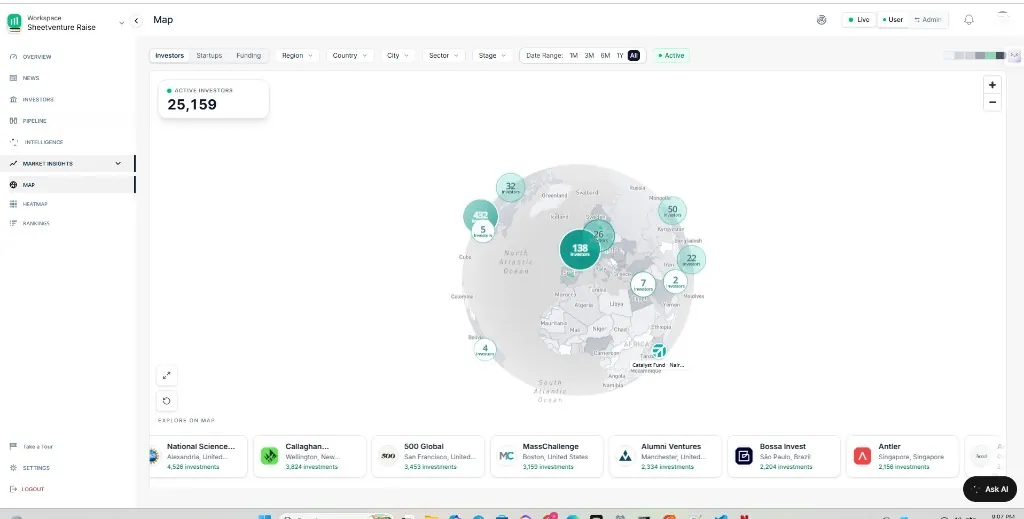
Find the investors who fund decks like this
A deck only works in front of investors who are actually active in your stage and sector. That is the part SheetVenture answers.